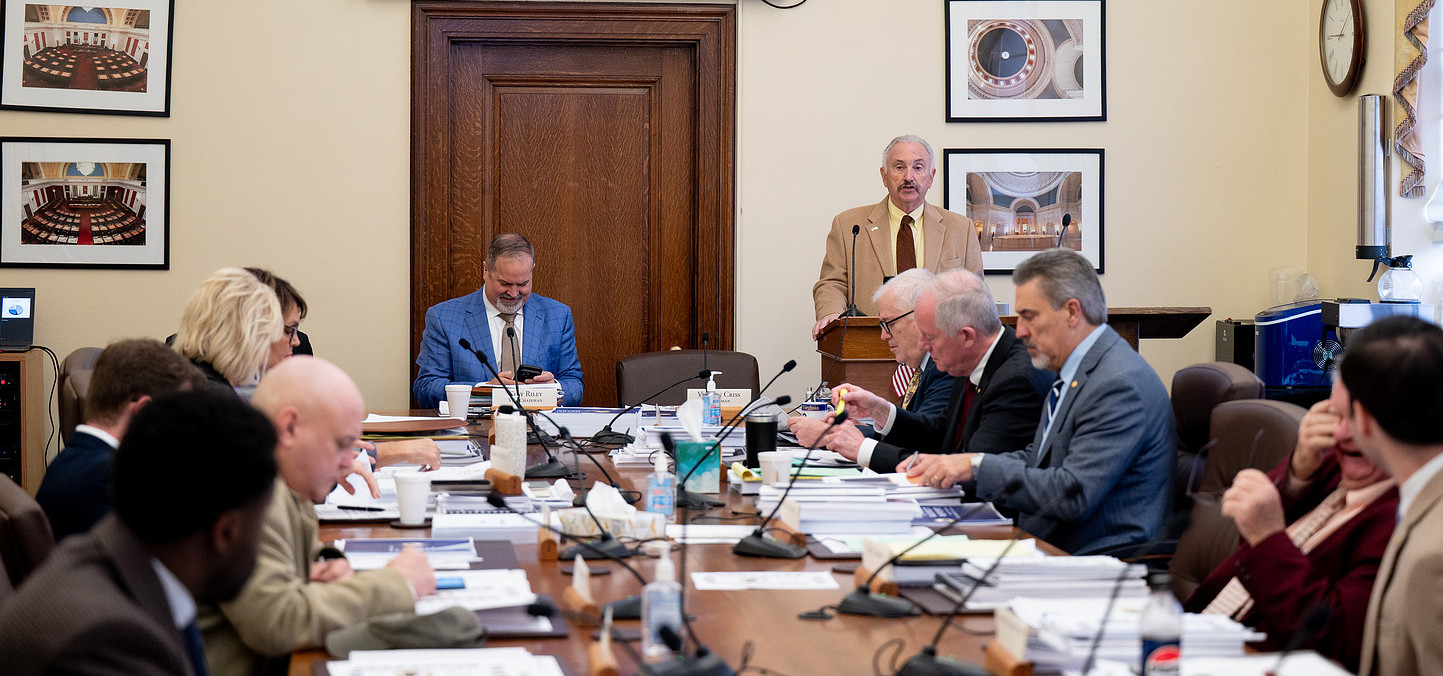


Jesse Jackson speaking at the Democratic primary campaign rally at Hazard, Kentucky, Memorial Gymnasium, March 1988. (Photos courtesy Mimi Pickering)
Sometime in early 1988 I got a call. I was then Executive Producer of Appalshop Films, part of a multi-media Appalachian cultural center here in Whitesburg, Kentucky.
On the other end of the line was Anne Braden. Anne was a famous civil rights activist. Martin Luther King praised her in his “Letter from the Birmingham Jail.” When Anne was a Louisville Times reporter, she and her husband Carl were charged with sedition because they purchased a home for a Black family in a restricted white neighborhood. Carl went to prison, and Anne was canned at the Times. She eventually moved on to organizing full-time.
She said, “I have heard some good things about you, and I think you should advance this Jesse Jackson campaign rally in Hazard.” I told her that I was flattered, but it was not the kind of thing I did, and besides that I had a job. Whether she heard me or not, it made little matter. She just repeated herself and explained the rally plan for the next thirty minutes. And then, again the next day. And the next. Before I knew it, we were talking logistics, and then I was speaking to Jackson campaign staffers in Chicago, Washington, and Atlanta without ever agreeing to help.
The first time I saw Jackson in person was coming off the plane at the London/Corbin airport and making his way to the small press bus we’d arranged. He looked wary and a little stiff. Besides giving the campaign East Kentucky talking points, I’d given them a list of media people to trust and a few not to. I got the feeling at that moment he was having a hard time sorting which guy was whom. We had maybe a dozen radio, TV, and print reporters in the vehicle.
(Credit: Appalshop)
Then as we were driving out of the airport lot, Jackson spotted a commemorative marker for NBA great Frank Selvy. Jackson said with absolute excitement, “Frank Selvy is from here? I had no idea. I saw Frank Selvy score 100 points one night.” And if you ever want to break the ice with a group of Kentucky men, bring up basketball.
Selvy from Corbin, Kentucky played collegiate ball for the Furman University Paladins located in Greenville, South Carolina, Jackson’s boyhood home. One of the first games to be televised statewide was a Furman game against Newberry College, billed as Frank Selvy Night. The All-American hit a forty-foot shot at the buzzer for his 100th point.
The drive to Hazard was easy with questions and answers about sizing up the campaign and what do you really think about us. It is never far from the mind of any of us who grew up in the Appalachian coal fields that when we meet someone, we think: will they think we are poor, will they make fun of the way we talk, will they look down on us?
And the unrecognized irony of our winding mountain trip was that though we were riding with a Chicago civil rights icon and presidential candidate, he had actually grown up in another part of Appalachia where poor sharecroppers and mill workers were the equivalent to our coal miners.
At the Memorial Gymnasium in Hazard, the stage was set up under one basket, and the end zone roped off. The rest of the place was packed. Though the African-American population in the region had slipped under 5%, Black school kids and grandparents showed up in their Sunday best. Towns people and country people filled folding chairs on the floor and all the hard wooden benches in the stands. There was a minister’s invocation, welcoming remarks from the mayor and the county judge executive, and then my hero Joe Begley stood up to introduce Jesse.
Joe was a legend, a proprietor of a country store, crusader against strip mining, the sage that Studs Terkel came to for quotes about the American Dream. I remember the CBS producer Shad Northshield once told me Joe was the closest thing to Lincoln the country still had. I don’t recall what Joe said, just that he looked nervous, and his voice was reedy, but he did the job.
And then Jackson stood up, and he seemed a bit tentative at first, but that all changed. Of the Jesse Jackson political speeches like “Keep hope alive” and “I am somebody,” my favorite is the one centered on his grandmother’s scrap quilt. And it was pitch perfect for an East Kentucky audience where a lot of people had grown up winter nights under patch work quilts near banked coal stoves.
Slowly, Jackson moved to call and response, and then it began to build. He talked about no shame in growing up poor, he talked about dignity in struggling through deprivation, he talked about jobs, health care, and he actually talked about standing up to the strip miners coming after your land. Even the county judge and mayor who spent their days taking every chance to promote the coal industry were chanting and clapping along with the thousands in the crowd calling for justice.
I got my high school diploma in that gym. I saw the Young Rascals, my first rock and roll concert, there. I watched a big-time wrestling match there where guys came out of the crowd and started punching out the heels.
I remember the Hazard Bulldogs beating the Breathitt County Bobcats in the 14th Region finals, and the crowd stomping the stadium seats, screaming “We want to go to the state, we want to go to the state, hey, hey, hey.” I was there when the virtuoso Rubinoff came to play his Stradivarius for the poor children of Appalachia. And each year I was part of standing ovations for Louisville’s Carriage House Players performing Twelfth Night, and Much Ado About Nothing, and Taming of the Shrew, so that we children might have culture in our lives. But none of those events matched the electricity or the volume of Jesse Jackson in Memorial Gymnasium that day. Maybe the regional finals came close.
When it was over, I don’t remember anyone saying goodbye or good going. They just got in the van and left. The rally was momentary, and then it was done. But then again there is nothing wrong with moments.
In his book Hardball, Chris Matthews says the first rule of politics is that if you want a friend, let him do you a favor. I had no deep affection for Jesse Jackson before Anne Braden called. Maybe I would have voted for him in the primary, but that had as much to do with not being sold on his opponents. But after the event, my buddies and I took the video footage we shot and edited our own Super Tuesday Jesse Jackson for President spot. We coughed up a few hundred bucks and bought time on the CBS affiliate in Hazard.
And as was predicted Jackson did not win Kentucky, or run that well, even in the towns like Hazard that could watch our commercial. I never saw him again, except on television. But from that moment forward, I was his friend. I cared about his wellbeing. And today I mourn his death.
“…I may be on welfare, but I am somebody.
I may be small, but I am somebody.
I may have made mistakes, but I am somebody.
My clothes are different, my face is different, my hair is different, but I am somebody…”
Dee Davis is president of the Center for Rural Strategies and publisher of the Daily Yonder.
The post Jesse Jackson (1941-2026) appeared first on The Daily Yonder.