
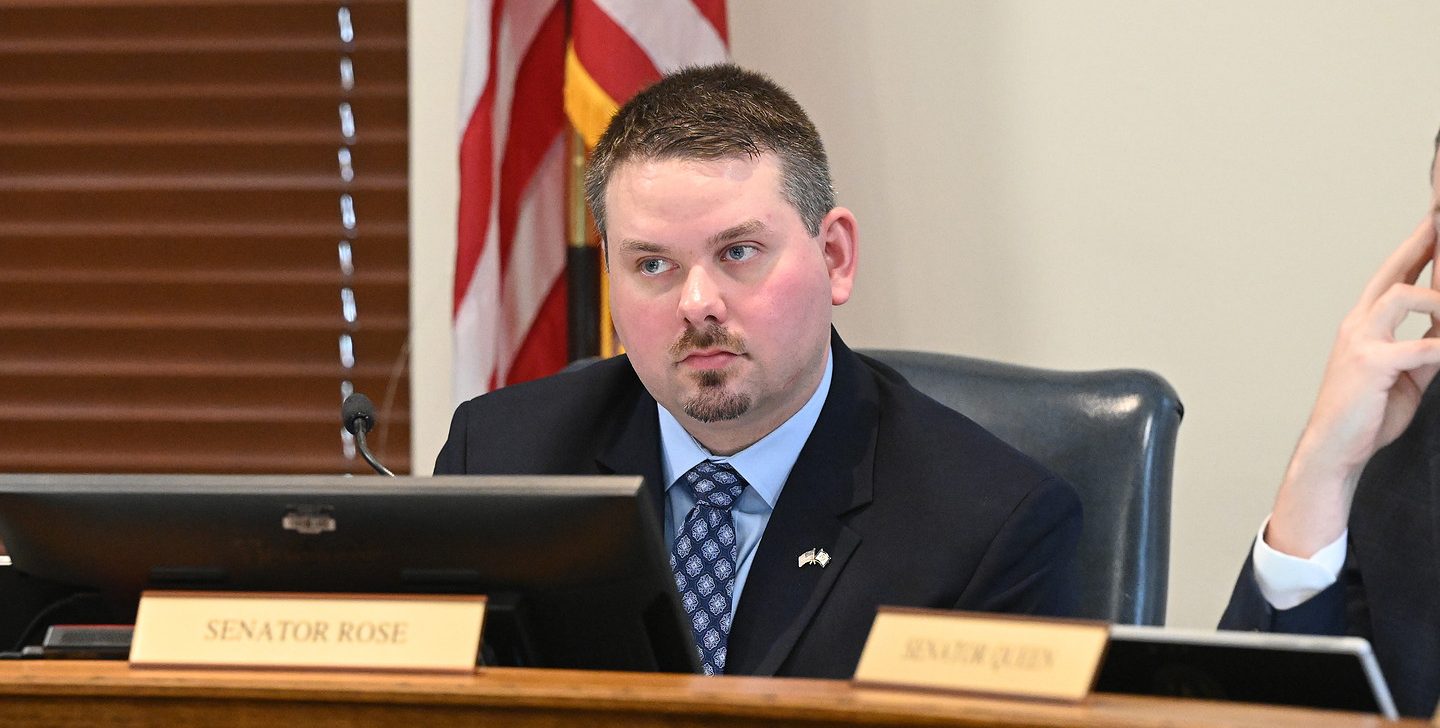
CHARLESTON — Sen. Chris Rose (R-Monongalia, 2) has introduced legislation aimed at changing how wind power projects are taxed in West Virginia, arguing the measure would create a more equitable energy tax structure.
Senate Bill 23 (2026) would amend and reenact §11-6A-5a of the West Virginia Code to clarify that wind power projects are not considered “pollution control facilities” for tax purposes. The bill would also specify that wind turbines and the towers to which they are affixed be taxed as real property, so long as the tower is affixed to the ground.
Under current law, certain facilities classified as pollution control projects may qualify for alternative tax treatment. SB 23 would explicitly state that any power project “designed, constructed, or installed to convert wind into electrical energy is not a pollution control facility for purposes of this article.” The legislation further provides that “any wind turbine installed at a wind power project, and each tower upon which the turbine is affixed, is real property for the purpose of taxation so long as the tower of the wind power project is affixed to the ground.”
Sen. Rose said the bill is intended to address what he views as an imbalance in the state’s energy tax policy.
“Senate Bill 23 is straightforward, common-sense legislation that levels the playing field for energy taxation in West Virginia. For years, wind power projects have enjoyed a special tax break by being treated as ‘pollution control facilities’ – a classification they clearly do not deserve. This bill simply clarifies that wind turbines and towers are not pollution control equipment and must instead be taxed as the real property they are,” Sen. Rose told WV StateWire.
He said the legislation would protect taxpayers and local governments from what he characterized as subsidizing one sector of the energy industry.
“West Virginia taxpayers, counties, and schools should not be forced to subsidize unreliable wind energy through artificially low property taxes while our coal and natural gas industries — the backbone of our economy — pay their full share. This measure ensures fiscal fairness, protects local government revenues, and sends a clear message: in West Virginia, we reward reliable, affordable energy that actually keeps the lights on and our families warm, not feel-good projects propped up by special tax carve-outs.”
Sen. Rose added that he believes the bill will strengthen the state’s long-term economic and energy outlook.
“I’m proud to have introduced SB 23, and I look forward to its passage to strengthen our state’s energy independence and economic future.”
If passed, the bill would require wind energy projects to be assessed and taxed in the same manner as other forms of real property. Supporters say the change would increase local tax revenues, particularly for counties and school systems where wind projects are located.
The bill has been referred to committee for further consideration.