
DAVIS — The Mayor of Davis traveled to Washington, D.C., earlier this month to discuss a local redevelopment success and raise concerns about proposed federal legislation.
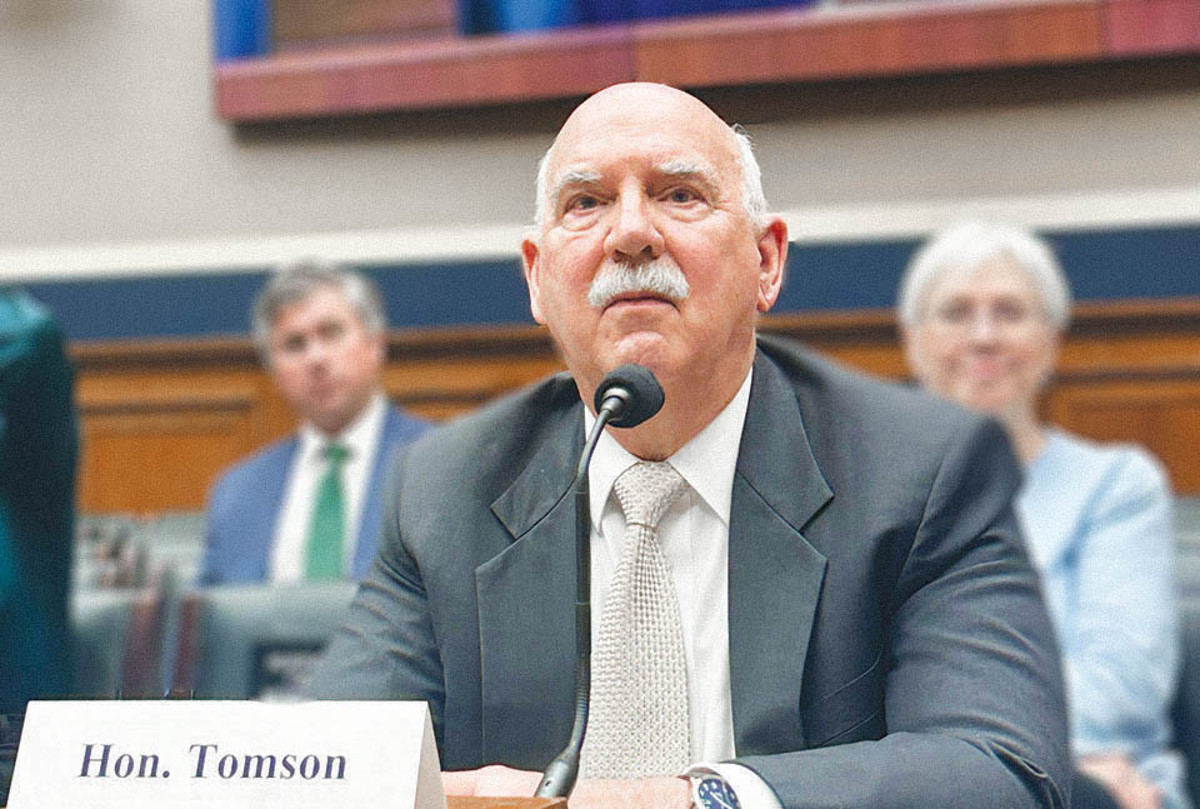
Mayor Al Tomson testified March 4 before the U.S. House Energy and Commerce Subcommittee on Environment on behalf of the National Brownfields Coalition, a group that advocates for the cleanup and reuse of contaminated properties.
The coalition, founded in 2005, includes organizations such as the U.S. Conference of Mayors, National League of Cities and National Association of Counties. Its work focuses on supporting federal funding and resources to help communities assess and redevelop vacant or polluted sites.
During his testimony, Tomson pointed to a project in Davis as an example of the program’s impact. A former gas station along the town’s main street was cleaned up using Environmental Protection Agency Brownfields funding, with help from the West Virginia Department of Environmental Protection, and redeveloped into the Big Timber Logging Camp brewery.
Tomson said the EPA Brownfields Program has awarded nearly 5,300 grants over the past 30 years, contributing to approximately 75,000 environmental assessments. He added that more than 235,000 sites, covering about 4 million acres, have been cleaned up and prepared for reuse.
However, Tomson warned that three bills currently under consideration could negatively affect the program. He said the proposals could allow private companies to use Brownfields funding for large industrial developments without sufficient safeguards or local input.
“While there are some small improvements to the existing federal brownfields statutory structure that could be part of congressional action which brownfield communities would welcome, our main message today is that, if it ain’t broke, don’t try to fix it with controversial provisions that could undermine one of the most successful examples of federalism and intergovernmental, public-private collaboration at work in America,” Tomson said, calling on Congress to reauthorize the program with minimal changes.
Tomson said failing to reauthorize the program would leave the EPA without clear direction to continue and expand its work.
Following his testimony, Tomson addressed questions from lawmakers about data centers and energy development. He raised concerns about a proposal by Virginia-based Fundamental Data to build a 1,600-megawatt natural gas power plant, known as the Ridgeline Power Plant, near Davis.
Tomson said the project, which could support a data center spanning up to 10,000 acres, would be located just a few thousand feet from the town’s downtown area.
“The Davis community and the entire region are under a fundamental threat to our tourism economy, quality of life, and ability to determine our own future,” he said.
He also criticized a proposal that could allow such projects to be classified as “nationally significant infrastructure,” which could enable them to move forward without certain federal environmental reviews and potentially receive federal funding through the Brownfields program.
Tomson said residents would view such actions as harmful to the community and an overreach of federal authority.