

Editor’s Note: This interview first appeared in Path Finders, an email newsletter from the Daily Yonder. Each week, Path Finders features a Q&A with a rural thinker, creator, or doer. Like what you see here? You can join the mailing list at the bottom of this article and receive more conversations like this in your inbox each week.
Hillary Bachelder is a director, cinematographer, and editor based in Taos, New Mexico. Her latest documentary, titled “burn, scar,” follows a community through the aftermath of the 2022 Hermits Peak-Calf Canyon wildfire. The fire was accidentally started by the U.S. Forest Service and became the largest in New Mexico’s history.
Enjoy our conversation about auspicious timing, building trust, environmental libertarianism, and glimmers of hope in climate adaptation.
This conversation has been edited for length and clarity.
The Daily Yonder: Could you set up what the film is about?Hillary Bachelder: In 2022, the U.S. Forest Service was doing a prescribed burn in the mountains of northern New Mexico, and it escaped its control lines and turned into the largest wildfire in New Mexico’s state history. It was close to 342,000 acres, and hundreds of people lost homes and had their ranches and their livelihoods impacted. The film follows members of the Forest Service as they are trying to move forward from this horrific tragedy and families who lost everything in the fire. It then takes a historical step back to look at the hundred-plus year history of the relationship and dynamic between the rural communities of northern New Mexico, the Forest Service, and the federal government here. The film tries to hold all of that and ask how we as a community move forward.DY: How did the story find you, and how did you find the story?HB: It’s an unexpected entry point for me. I had only moved to Taos in the fall of 2021 or late summer. I decided to take this climate class through The Santa Fe Watershed Association about different climate issues and how they impacted New Mexico specifically. I had just moved to this place and I was like, “Oh, I should learn a thing or two.” In early April of 2022, they did a field trip with this guy, Dennis from the Santa Fe National Forest. He took us to look at prescribed burn treatment areas they had just done and to talk through the importance of prescribed fire. I had a ton of questions because I didn’t grow up in a place where I had a relationship to wildfire at all. I bugged the heck out of him for a couple hours, and we had a little bit of a rapport. Within days of that meeting, the Hermit’s Peak Calf Canyon fire happened.That ended up being Dennis, who is the main character in the film. So the week before the fire happened, I was walking around with all of this information about prescribed fire and how important it was as a tool for forest management. And then the greatest prescribed fire disaster in human history, as Dennis puts it in the film, happened just days later, so I was very primed to tell the story and started poking around.The Forest Service, after this happened, really shut down to the media. They had to go on the defensive that summer and all the rest of that year. There was so much turnover in leadership on the Santa Fe National Forest. If I hadn’t had that existing relationship with Dennis, I don’t think I would have gotten the access that I needed.DY: I read somewhere that you grew up in a small town in Maine. Would you characterize that upbringing as rural, and either way, how did your upbringing and sense of place inform how you were connecting with the rural communities you were reporting on, as you were a newcomer yourself to the northern New Mexico area?HB: I grew up in Farmingdale, Maine, it had 2,000 people. We weren’t that far from Portland, so it’s a different flavor of rural. But the thing that really translated was an environmental libertarianism streak. There are a lot of folks in Maine, and a lot of folks in New Mexico who don’t have trust in the federal government and these large systems that they feel like they can’t touch and don’t really know. But they also have a really strong lived connection to the land. There is a political ideological tension there. But it was something that as soon as I landed in New Mexico, I was like, oh, I get this, I think I can talk to people from a base level of understanding of what this means.
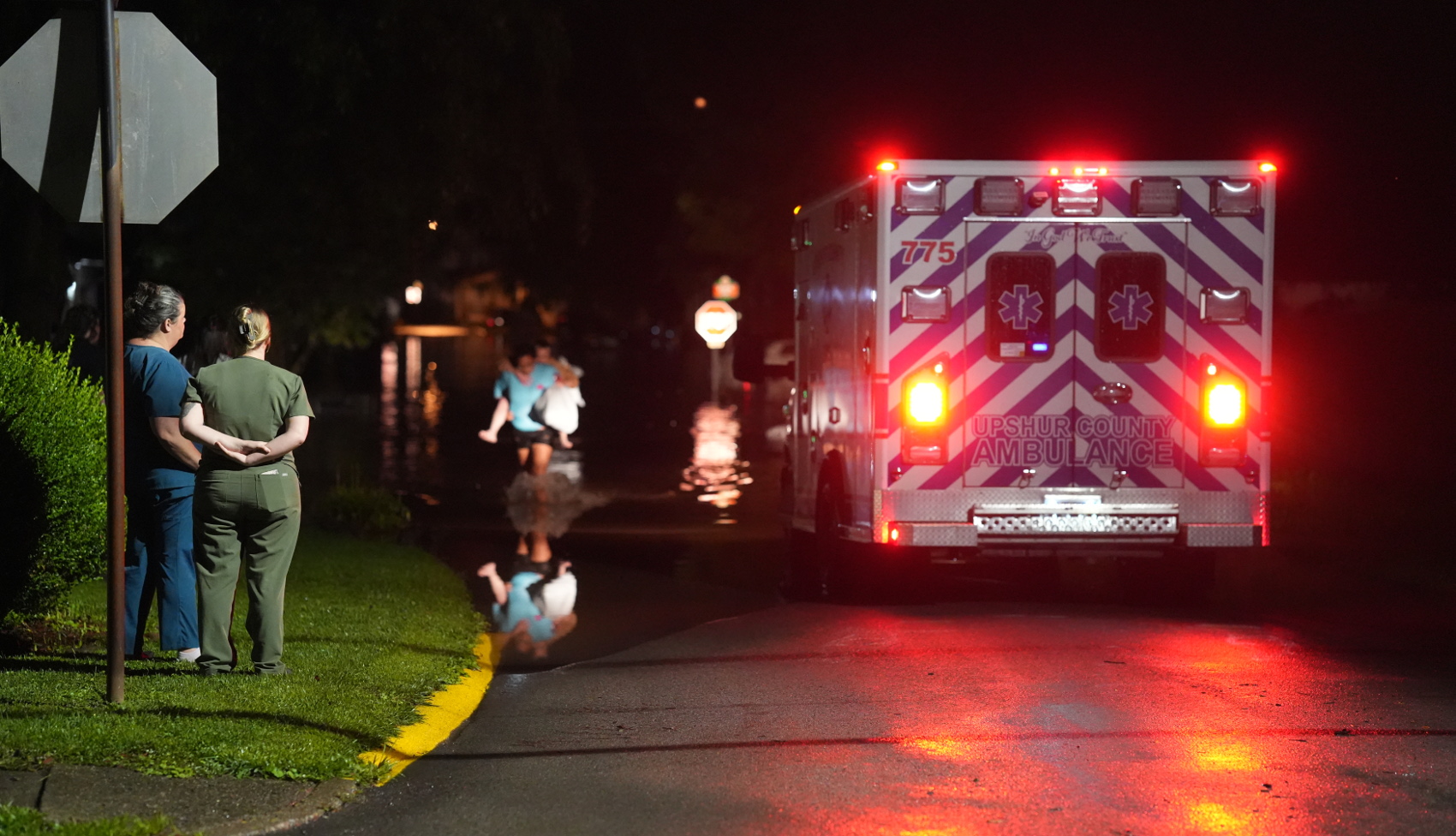
A still from the film burn, scar. (Image: Hillary Bachelder)
DY: Especially in the early part of the film, you were often filming people at some of the lowest points of their life. Their home had been destroyed, they had to sell off their cattle, the acequias weren’t running, and people couldn’t produce hay. How did you think about building trust?HB: The way that I like to tell stories is through unfolding vérité. It’s not the budget-conscious strategy that’s attractive to distributors who want you to be able to say where the story is going to go and how it’s going to end, on day one. I never know that.I always plan for these stories to take place over a few years, because I think that’s how long I had to keep showing up to build that trust. Everyone starts at a different level of openness and vulnerability. I did a lot of showing up without the camera throughout the whole process. I met people initially and would go back to their homes, sit down with them, and talk about what I could see the film growing into and where it could go. I was also listening to a lot of their stories and meeting whoever they wanted me to meet. It was a long process. I don’t think there’s a shortcut to building trust.I really wanted to be with them for other moments that weren’t just “bare your soul in the worst days of your life.” I want to make sure I’m seeing you with your family. I want to make sure I’m seeing some of the happy and beautiful and peaceful times in your life as well. Some of those make it into the film, and some of them don’t. But I think part of the process is them understanding what kind of things I’m asking to be with them in and film for. If it was just “call me every time there’s a tragedy, and I’ll come by,” we wouldn’t have had the relationship that I have with them.DY: I loved that the film followed the community as it lived through the aftermath of the fire over the course of four years. I’m sure if you had filmed for another year, there would have been new sides to this already multi-dimensional story. How did you decide when it was the right time to end the filming?HB: I think a big marker for us was 2025. We see a real shift when Trump comes into office and there are significant layoffs within the Forest Service. That created a different dynamic. A big thing that we’re exploring across the two sides of the story is this trust and power dynamic. For a hundred-plus years, the Forest Service has always held that power, and they wonder perpetually why they can’t build trust when they’re not super willing to cede power. This was a moment where that power dynamic didn’t totally reverse, but it was being chipped away. The relationship that communities had with the Forest Service and the federal agencies felt different. It was not a repetition of the version of the dynamic that we had seen for decades leading up to this. That felt like part of an ending.So much of the story just continues to be unresolved. There are still thousands of people who haven’t received their compensation from the government after having their houses burned, their acequias ruined. The Forest Service is still struggling to put good fire on the land and have the buy-in from the community that they need. There was just something about the dynamic in 2025 that felt like this is an interesting and important note to close out on.
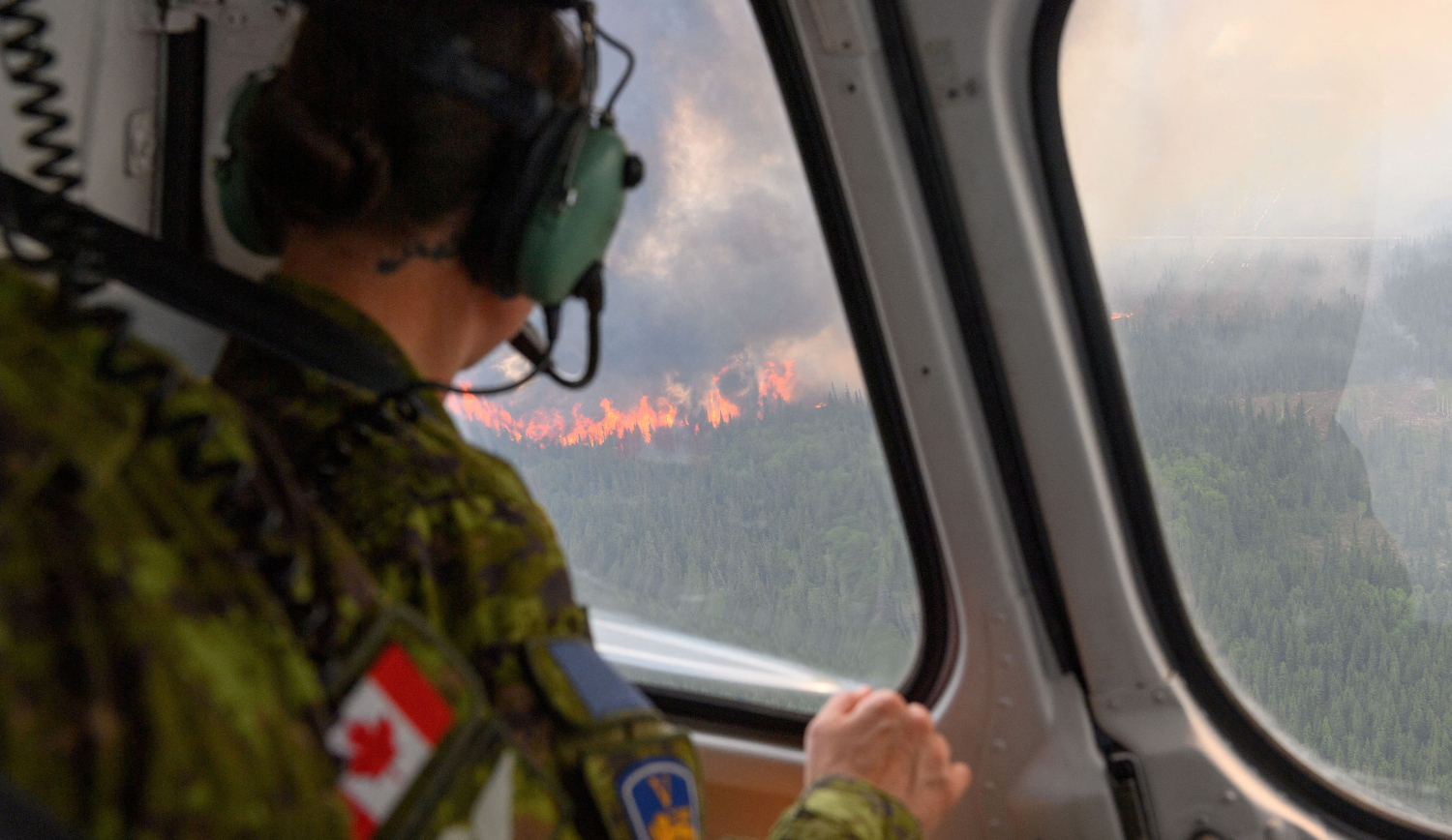
The 2022 Hermits Peak–Calf Canyon Fire is the largest wildfire in New Mexico’s state history. (Image: Hillary Bachelder)
DY: Throughout the film, changing climate looms as a theme in the background. It’s one of the Forest Service’s main talking points for why the prescribed burns will and must continue. At one point, the fire ecologist you followed, in talking about upset locals, said “their cause is just, but climate waits for no one.” In the context of wildfire in northern New Mexico, are the goals of justice and climate adaptation mutually exclusive?HB: You hit the nail in the head. In the writing and thinking that we did around the film as it was getting made, we were trying to hold justice and science, to boil it down loosely, and to hold those as potentially conflicting themes. I really hope that they aren’t. Having moved alongside this story for four years now, I’m not going to choose a side. I think justice is so important, and also a scientific approach to dealing with the climate crisis is so important. There’s nothing in how those actually boil down into land management that means that they need to be mutually exclusive. It’s just the relational aspect and the historical baggage that’s preventing those things from going hand in hand.I don’t think the relational trauma that’s there is easy to solve. I don’t mean to say oh, just to fix that, and the rest lands nice and neatly into place. In our story, justice and science are going to bat against each other, and it’s a distraction from the real issue.DY: A glimmer of hope in the film is a joint land stewardship project where Latino community members are paid to steward a portion of national forest land. Where does that program stand now? And what is your sense of what it can and can’t do to rebuild trust between the Forest Service and those in the burn scar?HB: I am really excited about that program, and what it does locally, mostly here in Taos County. I’ve talked a lot with one of the founders of that program, and he’s always been really clear about the strengths and weaknesses of the forest council and co-stewardship approach. It is one of those things that is a good relational solve. It builds bridges between individual community members and individual forest service folks, and it creates economic opportunities for those local community members, which is really important.At the same time, it’s not a program that you can scale up to confront the climate crisis. We need to manage millions of acres of land, and these guys going out with their chainsaw to do one acre at a time is not going to be the solution writ large for all of our public lands. It needs to be a “yes, and.” We should do this program, and we need to do other things as well. I look at this one as being a great economic benefit to the community, a great trust building step. It’s all in service of goals that the community and the Forest Service agree on, so it’s a win, win, win in a very local, grassroots way. But again, there’s no plan to like scale it across the country in exactly this iteration.The forest program here is modeled off of the acequia structures, which are hyper-specific to northern New Mexico and have a lot of cultural significance here. Something we’re really excited to talk about with the film when we go to screen it in other places is, is there a version of co-management programs that would involve something that holds that same level of cultural significance, but that’s true to where you’re based and you’re from? We can’t take the acequia system and export it to Maine or to Idaho, but what feels true and meaningful in those places?DY: I know that you are building an impact campaign around the film. Can you tell me more about that vision as it’s taking shape, and how the film will travel to other rural communities?So far we have three prongs to our impact goals. The first two are centered around having conversations around good fire and healthy fire, and what that looks like. [We’re] also bringing a greater level of focus and attention to communities who are impacted by climate crises. That’s fires, floods, everything else. We see in the film that FEMA is totally insufficient at supporting those communities after loss, and so we want to have those conversations through the film.The third prong is what we were just talking about around co-management. People walk out of the theater and want to talk to us about what a complicated dynamic there is between rural communities and the federal land management agencies, and what do we do about it. We’re really excited to see what we can do about it. We want to spark some of this dialogue around co-management projects, and what’s possible on public lands.There’s a forestry guy that watched the film, and he was like, “what I was really struck with was trying to wrestle with this question of if I had to choose, gun to my head, between a land management strategy that prioritizes local interests or a land management strategy that prioritizes scientific best practices, in the situations where you can’t have both, which one are you going to choose?”I don’t have an answer to that question, but I think that’s an interesting and helpful framework for us to get people in a room together, see where everybody’s coming from, and see if there’s room to build bridges.
The final scene of the film shows a powerful moment between a rancher and his son. (Image: Hillary Bachelder)
DY: My last question is about the final scene in the film. I was left sitting with it after I watched it. I’m curious how you chose that last scene, and how you feel about it.That’s my favorite scene. It was always in the film, but it wasn’t until later cuts that we realized it needed to be the ending. The scene is of one of our protagonists, Ernie, who’s a rancher. His son notices all this wheat grass growing that has been dropped by the Forest Service after the burn. Because there’s so much erosion, they drop seeds from planes to try and create new growth and hold the ground in place to prevent flooding. But this type of wheat has little barbs that can cut the cow’s mouths. It’s just this mismatch. Did the Forest Service consult with anyone locally when they made that choice? It seems like something easy to solve that would prevent this, again, this hit to the relationship [with the Forest Service] that the ranchers are experiencing when they see that weed.The thing that I love about the scene is that it feels really indicative of how I sometimes feel facing the climate crisis. I’m down on my hands and knees trying to pick up one seed at a time, and there are planes full of seed being dropped over the landscape. How is any one of us going to be able to solve this? But I love that Ernie’s son gets down there and starts picking it up, and then Ernie gets down and starts picking it up as well. I find something really hopeful in that. It’s really hopeful to me that everyone that I interacted with around this film, even when they have really strong differing opinions, it all comes from a place of passion and commitment to the land. Everyone in their own way is getting down on the ground to deal with the seeds. I find that really inspiring and hopeful. No one is giving up, no one is apathetic, and it still feels to me like something that we can solve.
This interview first appeared in Path Finders, a weekly email newsletter from the Daily Yonder. Each Monday, Path Finders features a Q&A with a rural thinker, creator, or doer. Join the mailing list today, to have these illuminating conversations delivered straight to your inbox.
Subscribe
The post Q&A: The Filmmaker Asking Hard Questions About Wildfires appeared first on The Daily Yonder.