

At the county level, low Medicaid spending can reflect a variety of things. Sometimes, it just means that not a lot of people are qualified to enroll in the program, perhaps because incomes are higher. But elsewhere, low spending points to gaps in coverage: people who may be eligible but not enrolled, or enrolled but not actually receiving care.
Nonmetropolitan, or rural, counties with high poverty are more than twice as likely as metro areas to also have low Medicaid spending, according to my analysis of county-level data. This edition of the Rural Index is meant to identify places where Medicaid may not be adequately serving high-need populations.
About 9% of rural counties had simultaneously high poverty rates and low Medicaid spending, while only about 3% of metro counties did.
The following map categorizes every county, both metropolitan and nonmetropolitan, with existing data into one of four categories:
Counties with high poverty
Counties with both high poverty and low Medicaid spending
Counties with low Medicaid spending
Counties with neither high poverty nor low spending
window.addEventListener(“message”,function(a){if(void 0!==a.data[“datawrapper-height”]){var e=document.querySelectorAll(“iframe”);for(var t in a.data[“datawrapper-height”])for(var r,i=0;r=e[i];i++)if(r.contentWindow===a.source){var d=a.data[“datawrapper-height”][t]+”px”;r.style.height=d}}});
The counties in red are where I suspect the greatest Medicaid coverage gaps exist.
The Medicaid data for this analysis was compiled by Patrick White of MedicaidSpending.org. Spending data reflects total spending by county between 2018 and 2024. Data on poverty and the uninsured comes from the 2023 American Community Survey.
When I refer to high poverty, I am referring to counties that are in the top quartile of poverty rates, meaning they had poverty rates at or above the 75th percentile nationally. The same goes for Medicaid spending. Low spending refers to counties that are at or below the 25th percentile nationally.
The average spending per resident in poverty over the six-year period was approximately $2,200. For counties in the first quartile, that number was $225.
Medicaid spending is measured by dividing a county’s total Medicaid spending between 2018 and 2024 by the number of residents living in poverty. Total spending alone doesn’t account for population size, while per capita measures can be misleading because they don’t capture need. For example, low per capita spending may simply reflect a higher-income population with fewer people enrolled. But my measure is intended to better approximate potential coverage gaps.
To check whether this measure reflects what it is intended to, I compared it to uninsured rates. Counties with both high poverty and low Medicaid spending also tend to have higher uninsured rates than other rural counties. In these counties, about 14% of residents are uninsured, compared to roughly 9% across rural areas overall. This difference is statistically significant, suggesting that low spending relative to poverty may indeed reflect gaps in coverage.
Coverage Gaps Might Be Linked to Hospital Closures
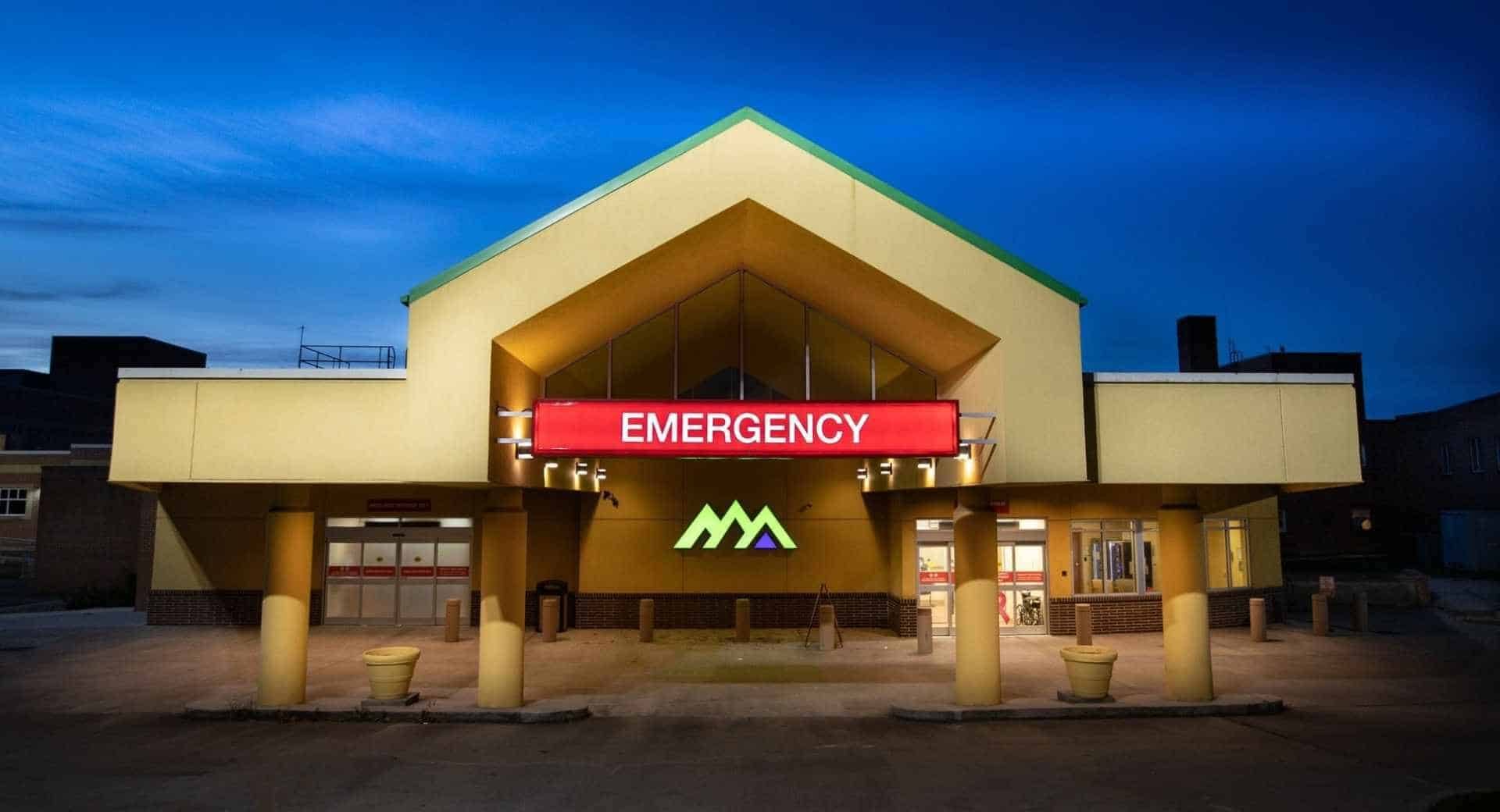
Rural counties that experienced hospital closures in the last decade were overrepresented in the high poverty and low Medicaid spending category compared to rural places that did not. Nearly 19% of rural counties with recent hospital closures are classified as high poverty and low Medicaid spending.
Approximately 2% of rural counties had a hospital closure in the last decade, but that number jumped to 4.4% in rural places with high poverty and low Medicaid spending.
Since 2005, 110 hospitals have completely closed in rural areas, according to the Cecil G. Sheps Center for Health Services Research at UNC Chapel Hill. In my analysis, I found that rural areas that had hospital closures were also more likely to have high poverty rates and low Medicaid spending compared to other rural counties.
In some ways, this is intuitive. By helping low-income Americans access health insurance, Medicaid fills critical coverage gaps and serves as a lifeline for health care systems – especially in rural areas, where hospitals are more likely to operate with negative profit margins. When Medicaid spending is low despite high need, it suggests many residents aren’t getting covered. And when uninsured patients receive care, hospitals often have to absorb the cost because there’s no third-party reimbursement. Rural hospitals have higher rates of uncompensated care compared to their urban counterparts, creating strain for hospitals that might be at risk of closure.
Researchers who study hospital closures make it clear that it is hard to pin rural closures to one single phenomenon, however. Rather, it’s a complex mix of circumstances that can lead to a hospital shutting its doors.
Medicaid Spending Patterns Vary by Region
The Black Belt and many tribal areas stand out as places where high poverty overlaps with low Medicaid spending, but for different reasons.
In the Mountain West, where many tribal areas are located, enrollment is often low due to barriers to both coverage and care. For example, in Glacier County, Montana, which includes much of the Blackfeet Nation, the poverty rate is around 30% and the uninsured rate is 29%, compared to roughly 15% and 9% in rural America overall. In Lewis County, Idaho, which includes the Nez Perce Reservation, the poverty rate is about 17% and the uninsured rate is 13%.
Part of what complicates the picture in tribal areas is the role of the Indian Health Service (IHS). IHS is intended to provide care to American Indian and Alaska Native populations and does not charge patients for care, but it is not health insurance and has long been underfunded. As a result, some care in these areas may not show up as Medicaid spending at all, even though need is high.
In tribal areas and the Black Belt alike, even when people are eligible for Medicaid, barriers like geographic isolation, transportation challenges, and lack of culturally appropriate care can limit how much care people actually use. That can lead to lower spending, but not because need is low.
This pattern looks different in Appalachia, another historically disinvested region with high poverty. Here, Medicaid spending is not as low relative to need. One reason is that many of the states that contain Appalachian counties have expanded Medicaid under the Affordable Care Act (ACA), which increases the share of the population that is eligible to enroll.
In the Black Belt, low Medicaid spending reflects coverage gaps and challenges to access to care in several states that have not expanded Medicaid under the ACA.
*This analysis relies on proxy measures, and many factors contribute to outcomes like coverage gaps and hospital closures. It does not establish a causal relationship. Rather, it is meant to identify where these patterns overlap.
The post Where Medicaid Spending Falls Short of Need appeared first on The Daily Yonder.