

Libby, Montana, sits on the banks of the Kootenay River in the far northwest corner of the state, closer to the Canadian border than any major city. In the summer, the hills are ripe with huckleberries, and every turn might reveal a big horn sheep, one of the region’s native animals. At golden hour, the huge tamaracks and pines glow in the setting sun.
Libby wants to move past being known as “the asbestos town” — an identity it’s had since the toxic dust was discovered in a vermiculite mine. Over the years, it’s been a barrier to tourists fearing the asbestos in the air.
That’s incredibly damaging for a community that relies on tourism dollars — from hunting and fishing to recreation on Lake Koocanoosa, the reservoir just out of town. It’s something the town wants to build on— but their reputation as asbestos central is not helping.
Kootenai Falls, between Libby and Troy on Highway 2 is one of the attractions in the area. (Photo by Ilana Newman/Daily Yonder)
Throughout the 20th century, a vermiculite mine was one of the main employers in the area. The lightweight mineral is used in insulation and as an additive to potting soils. It wasn’t until the end of the century that it became clear that the vermiculite mined in Libby had a dark side — asbestos — a byproduct of the vermiculite that was released into the air when processed.
The mine closed in 1990, and the mine site was added to the Superfund priority list in 2002, but lung problems and deaths in people who were exposed to asbestos beforehand continue to be an issue in Northwest Montana.
Reinventing the Town’s Image
A 2009 Guardian article called the town “poisoned,” and a series of articles in the Seattle Post-Intelligencer dubbed Libby “the town left to die.”
The notoriety and negative press helped citizens of Libby pursue legal recourse against W.R. Grace, the mine’s owner. Ultimately, the victims were able to receive compensation for deaths and disease caused by the exposure, funding for a clinic dedicated to asbestos-related diseases, and the addition of the Libby mine as a Superfund site.
But two decades later, that publicity is still skewing on the negative side. The town’s Chamber of Commerce has been working to revamp Libby’s internet footprint — from pages of articles about asbestos to videos of beautiful scenery and outdoor activities.
Mineral Avenue, Libby’s main street, features coffee shops, restaurants, stores and even a new climbing gym. (Photo by Ilana Newman/Daily Yonder)
“It’s all very much outdated information, from when it was more of an issue, or just not true information,” said Chamber of Commerce Director Myranda Cravens, about what comes up when you search for ‘Libby, Montana’ online.
That’s not to say asbestos-related disease is not prevalent in Libby still, but Cravens wants to make sure that tourists know it’s not in the air or contagious in any way that should prevent visitors. She said people should know Libby for the beautiful rivers, forests, and mountains, and not just for being a Superfund site.
“We’ve had a couple videos go viral, and the comments blow my mind. I think it was like, ‘You can’t touch the trees around here, or else you’ll die within 48 hours of asbestos’,” said Cravens.
A Rediscovered Industry
While trying to move forward, Libby is exploring many avenues, including reinvesting in mining. A new copper and silver mine was fast-tracked through the Trump Administration’s expedited permitting process last fall and is on its way to approval.
The Montanore Mine, now known as the Libby Exploration Project, is located near Libby and is owned by Hecla Mining Company. (Photo by Ilana Newman/Daily Yonder)
Outside of Libby, at the mine site, near an unused mine shaft, JP Downey, the local current care and maintenance supervisor for Hecla, showed off the water treatment plant and emphasized how many times the water is cleaned before it leaves the plant. Treated water flowed out of the plant, cascading into the landscape below.
Downey said that the community is mostly supportive of the soon-to-be revived mine. Hecla also owns another copper and silver mine in nearby Troy, which has been closed since 2015. Downey said that many local miners are excited to have work back home again.
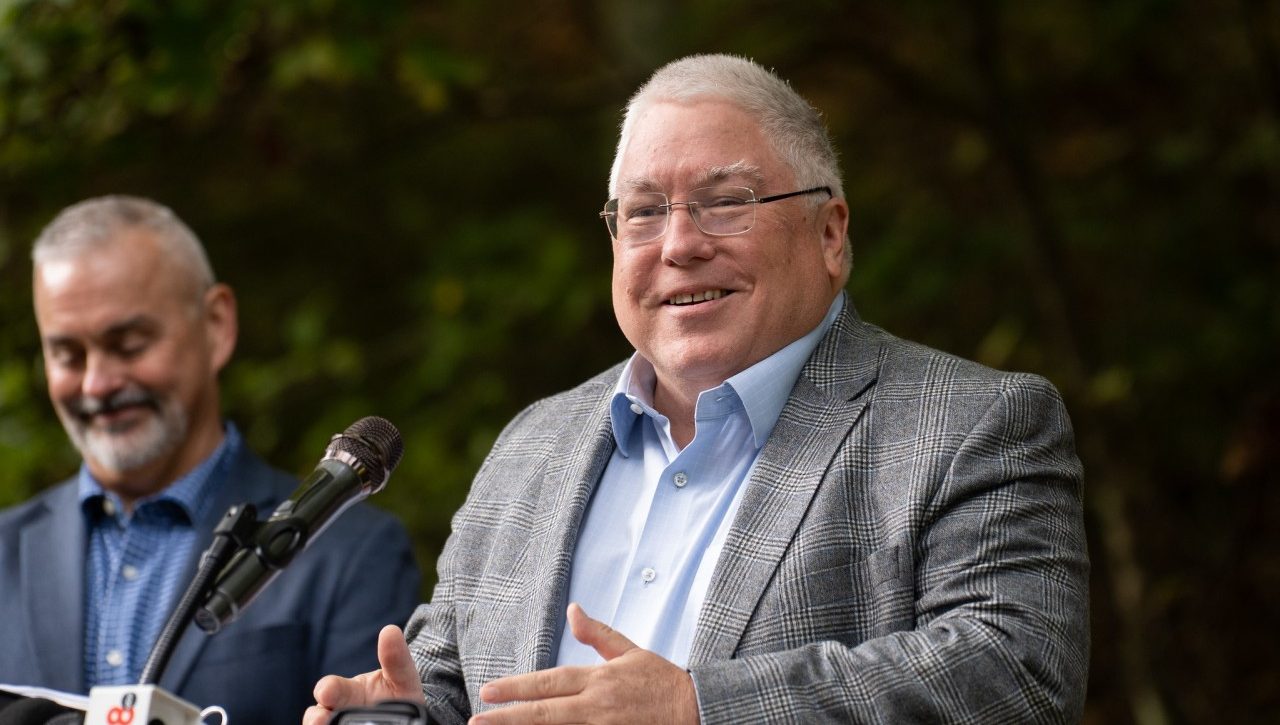
JP Downey, the maintenance supervisor for Hecla Mining, shows off the water treatment plant at the Montanore mine outside of Libby, Montana. (Photo by Ilana Newman/Daily Yonder)
“When the Troy mine shut down, they had to go to work out of town, so up in Alaska, down in Nevada, and so, of course, they all can’t wait to come back and work at a mine here,” he said.
But some think the mine is moving too fast and threatens the Cabinet Mountain Wilderness area near where the mine is located, as illustrated by a recent lawsuit against the Trump Administration for the expedited permit, filed by environmental groups, including the Montana Environmental Information Center and the Yaak Valley Forest Council.
“There are some places you just should not permit a mine, and this is one of them. Some of the cleanest waters in the lower 48, a refuge for endangered species such as grizzly bears and bull trout, and one of the first wilderness areas ever created. It’s just a terrible spot for opening a mine,” said Derf Johnson, deputy director of the Montana Environmental Information Center, in a press release.
The mountains around Libby provide a home to everything from grizzly bears to bighorn sheep and rich flora. Some of that land is preserved from mining and other industry, like the Cabinet Mountain wilderness area, a 93,000-acre protected area established in 1964. But other wooded areas managed by the Forest Service are open to logging, recreation, and mining, while still remaining a home for many wild animals.
The Trees Around Here
Bruce Vincent is a third-generation logger from northwest Montana who is trying to do logging differently. His company has helped manage forested land owned by Hecla Mining, around recently reclaimed mines like the Troy Mine.
He’s also working on increasing grizzly bear habitat and increasing fire resiliency by logging intentionally to create fire breaks and “grow grizzly bear food” cutting down trees around rivers to allow sun to reach the ground and grow brush and berries for bears to eat. They also leave large stands of trees where bears can travel and find safety from open swaths of recently logged land.
Vincent recognizes that logging hasn’t always been a sustainable industry, but he wants to rewrite that narrative. “We have to own our past. The timber barons were real,” he said while driving down a bumpy dirt road outside of Libby on the way to see an active logging area managed by his son, Chas Vincent.
“Most people want sustainability. They don’t know what it looks like. Most people want to protect ecosystems. Most people want to have biodiversity. They have no idea what it means, but we think we should protect it,” Vincent said.
Despite wanting to move forward from asbestos while still protecting the biodiversity of the forests around the town, Libby still has the old vermiculite mine to manage as well, which remains a Superfund site.
Superfund Support
At the national level, Superfund is the common name for the Comprehensive Environmental Response, Compensation, and Liability Act (CERCLA) enacted in 1980, which allows the U.S. Environmental Protection Agency (EPA) to clean up polluted sites. The law created a tax on polluters with the idea that the funds collected could be used to clean up polluters’ messes.
The Superfund site remains in Libby, with cleanup completed on everything other than the former vermiculite mine itself, known as Operating Unit 3 (OU3).
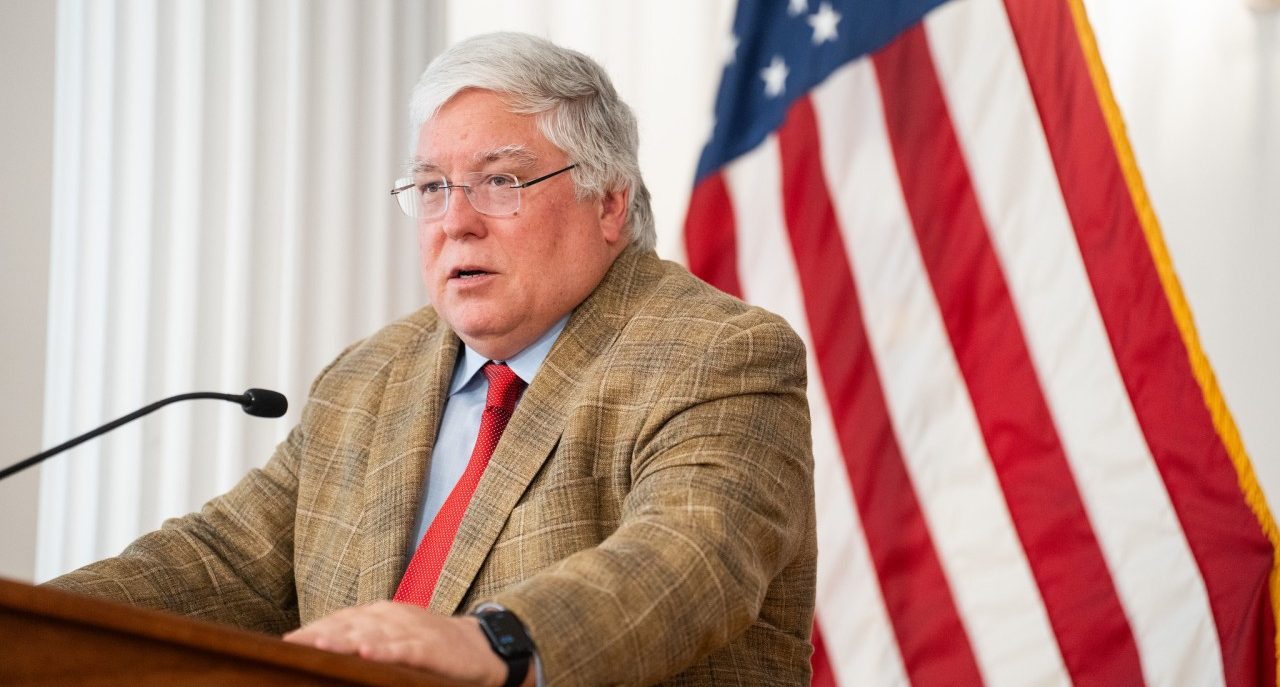
Cyrus Western is the regional administrator for EPA’s Region 8 and a former Wyoming state legislator. (Photo by Ilana Newman/Daily Yonder)
Cyrus Western is the regional administrator for EPA’s Region 8, encompassing Colorado, Montana, North Dakota, South Dakota, Utah, and Wyoming. He said that their ultimate goal is to release sites from the national priority list, when “we’ve got to a point where it is first and foremost safe for humans, that we have helped restore the environment to the greatest extent possible, and that we can turn it over to the states for operation and maintenance, and ultimately, that the public can enjoy it.”
Kate Stephens, former director of the Lincoln County Port Authority, said that “we’re probably the cleanest community in the nation as far as asbestos goes at this point. I mean, every parcel of property has been monitored and cleaned.” Stephens previously worked in banking and said that no mortgage would be approved in Lincoln County unless the home had been mediated.
That’s how Libby wants to be seen. As a community that’s moved forward. Not one that’s forgotten the past, but one that’s learned from it and continues to evolve.
“We understand that we’re also isolated. So anytime we’ve hit [challenges], there’s been an inward look: What are we going to do? It’s not a look outward: ‘Who’s going to come fix us?’ It’s: ‘What are we going to do?’ Vincent said.
The post A Montana Town Grapples With Its Past While Paving a Way Forward appeared first on The Daily Yonder.