

Editor’s Note: This interview first appeared in Path Finders, an email newsletter from the Daily Yonder. Each week, Path Finders features a Q&A with a rural thinker, creator, or doer. Like what you see here? You can join the mailing list at the bottom of this article and receive more conversations like this in your inbox each week.
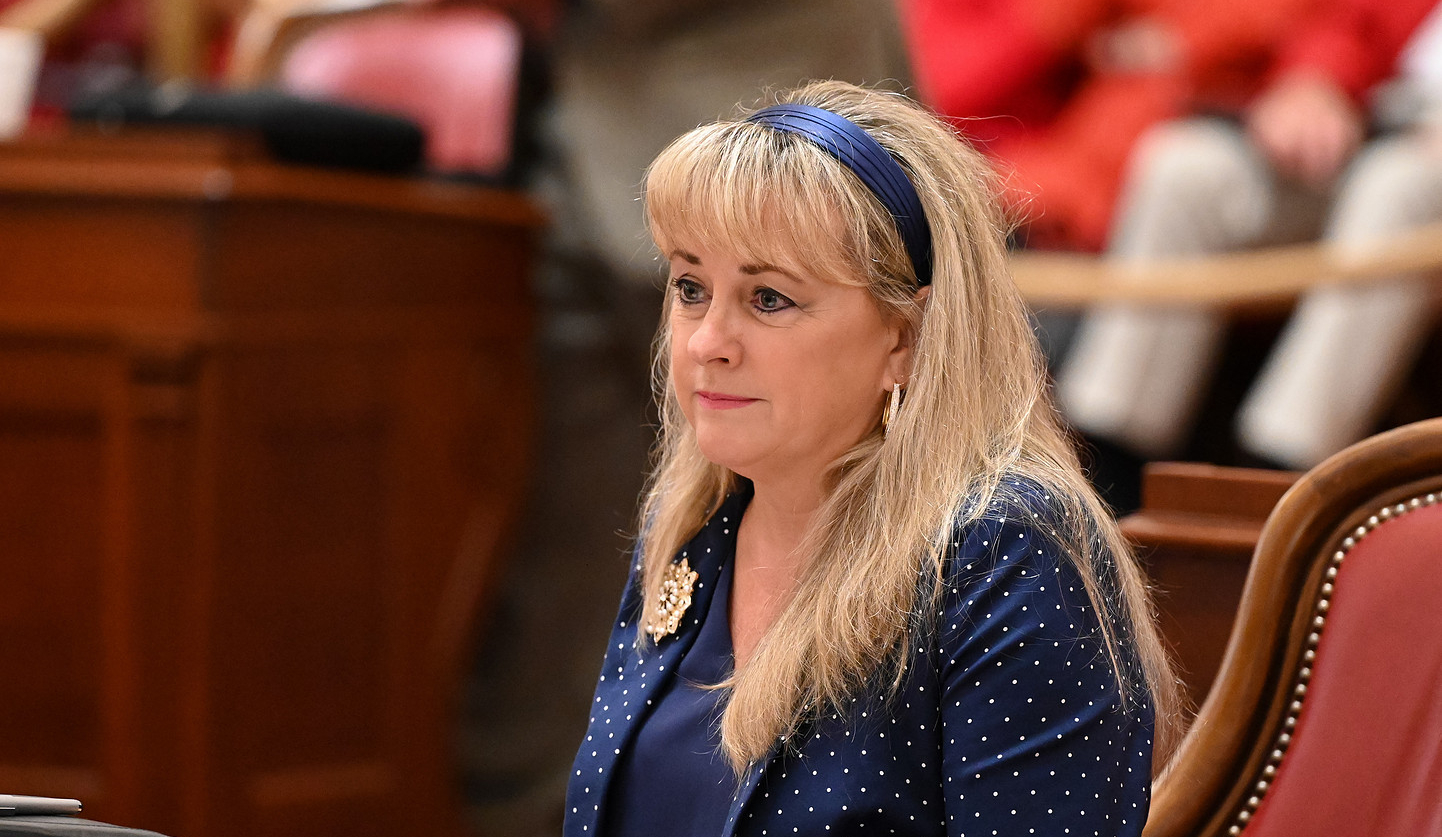
Dana Dominguez is a city council member in West Liberty, the first majority Latinx community in Iowa. Last year, West Liberty found themselves in the national spotlight after a local teenager was rapidly deported over Fourth of July weekend. I spoke with Dana about her role as a local leader in a time when state and federal policies are restricting local power.
This conversation has been edited for length and clarity.
Anya Petrone Slepyan, the Daily Yonder: Can you introduce yourself and your town?
Dana Dominguez: I am a city council member in a small little town in Southeast Iowa called West Liberty. And it is my hometown. I grew up there. I played sports there. I had 87 kids in my class, so very small. We have a population of almost 4,000 people, and it’s a very different, diverse little city. We are a meatpacking plant town. So that’s how my parents met, working in the meatpacking plant. I traveled the world and went off to college, and I came back here because it’s where I wanted to raise my children. And then I ran for office. And so here I am.
DY: What has it meant for you to grow up in West Liberty and leave it, and then come back and now be somebody who’s in charge of making decisions and supporting the local community in a really tangible way?
DD: Well, first of all, I never thought that I would do something like this, but you know, I was living in Los Angeles, and my tia, my aunt, became the first Latina alderman in Moline, Illinois. And she was in LA for a conference. This was 20 years ago, and I picked her up from the airport, and we had lunch, and she was telling me what she does. I didn’t even know what an alderman was, and she’s like, “Mija, you should go back home and run for office, they really need you.” And I’m like, yeah, right, I’m not doing that, I’m staying in California forever. She’s like, “no, it makes a difference.” And so years later, when Trump took office the first time, I had already come back home, started raising my children, and I just noticed some really divisive language on social media and interactions that I didn’t like. And this wasn’t the city that I remembered growing up in. That led me to run for office, because I was like, I gotta do something. I didn’t know what I was doing, but I had to do something. And when I ran, I brought in different folks from the community too, to run, and myself and Council Member Martinez, we won against incumbents, and we became the first Latino majority city council in the state of Iowa, which for our town, which is the first majority non-white community in the state of Iowa, meant a lot. It’s an honor.
DY: West Liberty is a small town of around 4,000 people, but you made national headlines last July. Can you tell me a bit about that?
DD: We had a community member, Pascual Pedro Pedro. He was 19 years old. He had just graduated the year before. He was a soccer star, led the team to state, really active in his church, in his community, and very much loved. Had a job, had a work visa, had been there since he was 13 years old, and he had gone in for his annual [ICE] check-in with his grandfather, and he was detained, and I saw a huge shift in our community. I mean, we raised over $20,000 overnight, and we’re a low-income community. Our pastor, the Catholic pastor, Father Guillermo – who was really a fighter for immigrant rights, and just a wonderful person for the folks in our community – had contacted Bernie Sanders, and Bernie had come to listen to the folks in our community who were hurting and talk about what was happening at the federal level. And so he had learned about what had happened to Pascual, and posted it on his Twitter, and then it kind of went viral from there. I saw a shift in people in our community coming together who vote differently, like “this is one of ours.” When you come for one of us in West Liberty, you’re going to face us all, and that gave me a lot more hope.
DY: When you think about divisions in the country – I think internet discourse is probably the best example of this – where it can be totally anonymous, and you’re just on your computer, yelling at somebody else who’s on their computer. That kind of separation and that insulation from real human interaction is part of what causes so much of this ability to dismiss and write off and deny the humanity of other people who don’t look like us, or don’t agree with us, or don’t sound like us, or don’t talk like us. It sounds like West Liberty doesn’t have that option.
DD: No. Like, we have one grocery store where everybody goes. I can’t go to the grocery store without folks coming up to me and saying, “hey, so and so’s been letting their dog poop in my yard again,” or you know all of the little things, and I know exactly who they’re talking about. And it’s kind of beautiful. But on the other hand, we don’t have a lot of the resources that big cities have. I love that people feel comfortable coming up to me and letting me know their problems, but when Pascual got deported, that was devastating. We got an attorney. When I say we, I mean the community, but really it was the fight of this amazing group called Escucha Mi Voz, who is really active in southeast Iowa. Ever since Pascual had been detained, they now have accompaniments where they’ll have 200 people out there outside a DHS building every first Tuesday of the month, and deportations have gone down dramatically since they started doing that. They got him an attorney, and it was over Fourth of July weekend, and then Monday after Fourth of July, his attorney was told that he was already deported. So they’re doing it really, really fast. It was devastating.
DY: Pascual’s deportation is the result of a federal crackdown, which some states and localities have supported while others have tried to respond with their own policies. Can you tell me what was the ordinance that you had planned to propose, and then what would that have done for West Liberty?
DD: So a lot of smaller communities and counties had proposed these human rights resolution ordinances to offer protections for our immigrant residents, and also as kind of a clap back to the threats that our state legislators had made about stripping protections against discrimination due to gender, which they ended up doing.
In the meantime, I’m a LULAC member as well. LULAC is the oldest Latino civil rights group in the nation, it’s one of the largest, as well. It’s the League of United Latin American Citizens, and we were working with our local LULAC chapter to start preparing businesses for if ICE were to show up. We were ready, and then they passed these bills that again minimize our authority as local governments to do anything. I mean, we’re closest to the ground, and they want us to figure out how to take care of our communities, and then they restrict us from doing that. We don’t have lawyers to take on the state. And we’re a meat packing plant company but we’re not allowed to have sanctuary status anymore. They also passed a bill about that.
DY: You grew up in West Liberty, you’re now a council member for West Liberty. What do you love about your community, and what do you want people to know about it?
DD: What I love about my community is that I get to be a part of it. They are trailblazers. They established a dual language program, and now kids, regardless of their background, learn Spanish and English from kindergarten on. We’re resilient. When they were going to shut down our meat packing plant in the 90s, which would have been devastating, community members got together, some of the local turkey farmers got together, and they bought the plant. It’s West Liberty Foods now. And now it’s a worldwide organization. The best thing about West Liberty is that I get to be a part of it, my children get to be a part of it. It’s this feeling when you go through the school system and you meet the families and stuff, there’s a lot of pride there, because we change things, and we make history.
This interview first appeared in Path Finders, a weekly email newsletter from the Daily Yonder. Each Monday, Path Finders features a Q&A with a rural thinker, creator, or doer. Join the mailing list today, to have these illuminating conversations delivered straight to your inbox.
Subscribe
The post Q&A: West Liberty City Council Member Dana Dominguez appeared first on The Daily Yonder.